Cross-Border Payments and the Future of Global Finance
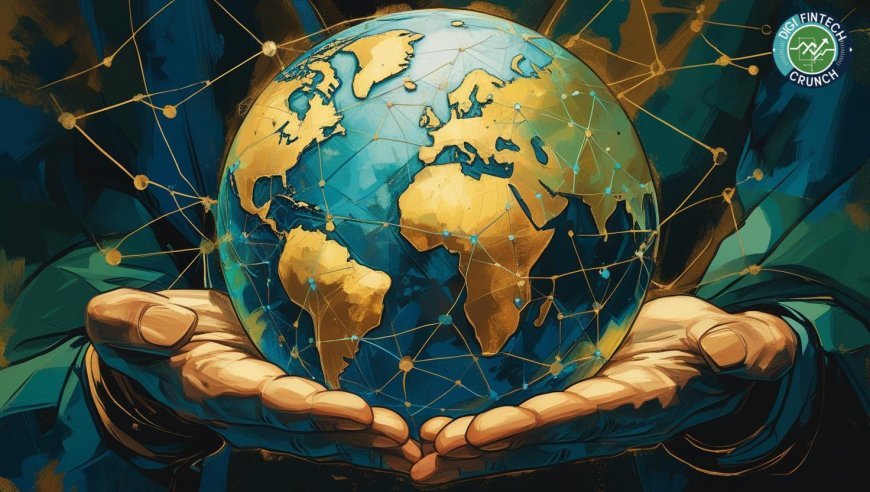
Cross-Border Payments and the Future of Global Finance
In a world where digital transformation has touched nearly every aspect of life, the process of sending money across borders remains surprisingly clunky for many. Hidden fees, long settlement times, and lack of transparency are still common pain points. But that’s changing fast. Cross-border payments are undergoing a quiet revolution-one that promises to reshape the very fabric of global finance.
Traditionally, international transactions relied on a network of correspondent banks. Each transfer had to pass through multiple institutions before reaching its destination. This system, while secure, often meant delays, unclear exchange rates, and added costs. For businesses, especially small and medium enterprises (SMEs), this friction could be a major hurdle in global expansion. For individuals, it meant that something as simple as sending money to family overseas could feel unnecessarily complex and expensive.
The need for change has never been more urgent. As global commerce grows more interconnected and as more people migrate, travel, and work across borders, the volume of international payments is rising rapidly. The financial system has been under pressure to evolve-and it’s beginning to respond.
One of the biggest drivers of this transformation is technology. Blockchain, in particular, is being looked at for its ability to make cross-border transactions faster, cheaper, and more transparent. Companies and even central banks are exploring blockchain-based systems that allow for near-instantaneous settlement without the need for traditional intermediaries. These systems don’t just move money-they create trust between parties that may be separated by thousands of miles.
Digital currencies, too, are playing a growing role. Stablecoins-cryptocurrencies tied to the value of fiat currencies-are increasingly being used for remittances and international trade. Meanwhile, the rise of central bank digital currencies (CBDCs) is opening the door to government-backed, digital money that can move across borders with fewer barriers. These innovations are not just about speed-they’re about inclusivity. They hold promise for the millions of unbanked or underbanked people around the world, giving them safer, easier ways to receive and send money.
Financial institutions are also rethinking their models. Fintech startups are entering the space with agile, user-friendly platforms, pushing traditional players to innovate or collaborate. The result is a more competitive environment, where customers are starting to see better rates, clearer fees, and more control over their transactions.
Of course, the road ahead isn’t without challenges. Regulatory frameworks vary across countries, and harmonizing them will be crucial to building a seamless global payments network. Security, fraud prevention, and data privacy are all pressing concerns that need to be addressed as the system becomes more digital and more interconnected.
Still, the momentum is clear. Cross-border payments are moving from being a pain point to a point of possibility. They’re becoming faster, smarter, and more inclusive. And as that happens, the dream of a truly global financial system-one that works for businesses and people, no matter where they are-is starting to feel within reach.